

Spain’s Secretary of State for Digitalisation and Artificial Intelligence argues that initiatives such as TRUST Lab are especially valuable because they combine research in a constantly evolving field. In this interview, she discusses Spain’s role in artificial intelligence, cybersecurity, regulation, digital talent and technological development in the Region of Murcia.
Ángela de la Llana
Friday, 6 March 2026
Profile
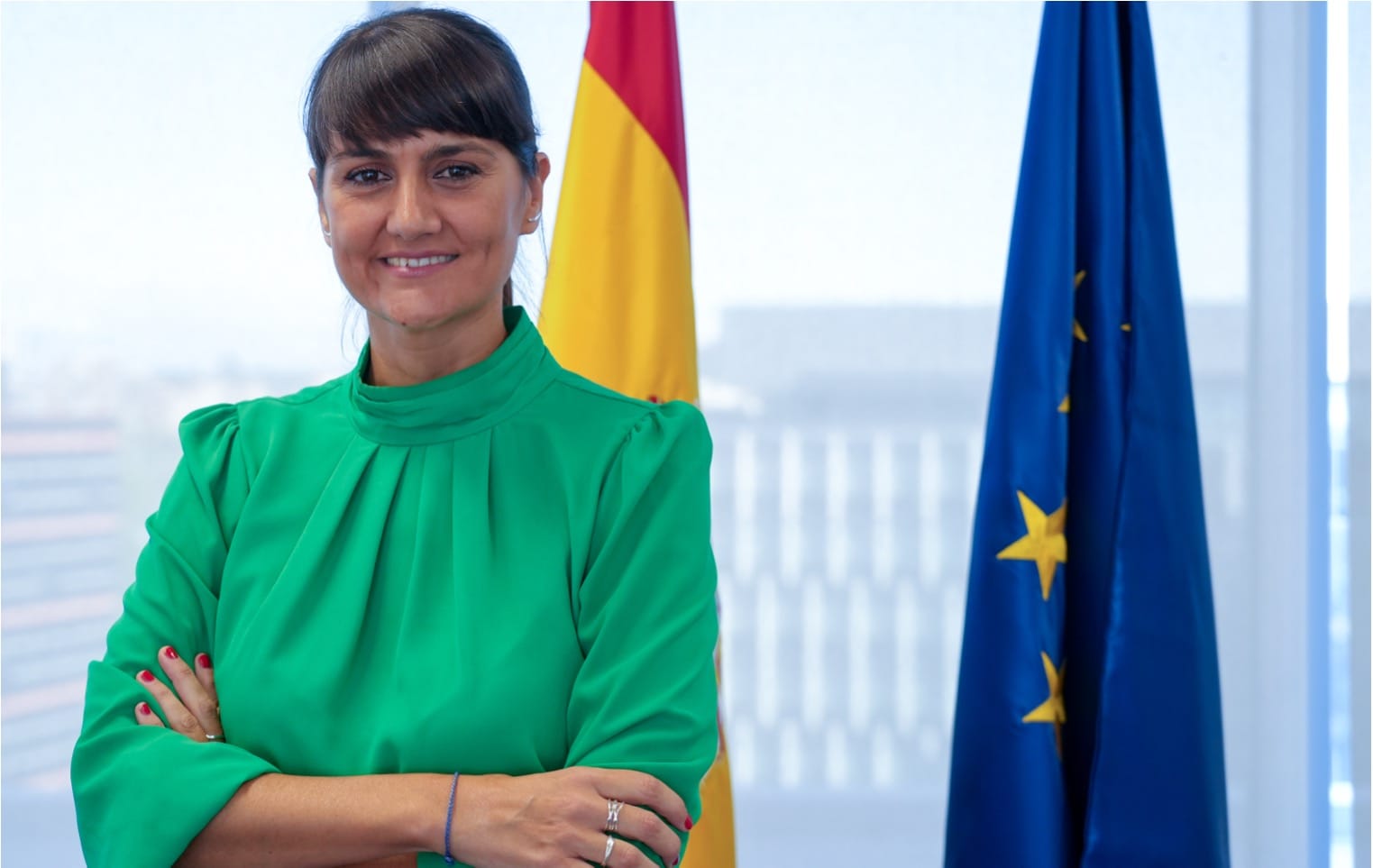
María González Veracruz has served as Spain’s Secretary of State for Digitalisation and Artificial Intelligence since September 2024. A graduate in Biochemistry and originally from Murcia, she reflects in this interview on the current state of artificial intelligence, cybersecurity, technological autonomy, AI regulation and the development of digital talent..
Interview
Artificial intelligence, the most cutting-edge technology today, falls within your area of responsibility. What stage of development is it currently at, and how does Spain compare with other countries in this field?
Spain is playing a prominent role internationally, and we are actively participating in debates on the governance of artificial intelligence. At the same time, we are promoting numerous initiatives to strengthen and consolidate the economic, access and usage capacities needed to take advantage of the opportunities that artificial intelligence offers in all areas. The Government is working proactively to address the challenges and opportunities enabled by AI through initiatives such as the Spanish Agency for the Supervision of Artificial Intelligence (AESIA), the first of its kind in Europe; the strengthening of supercomputing capabilities through two European AI factories in our country; and the development of the ALIA family of language models. I also consider particularly relevant the programmes we are promoting to foster innovation and the application of AI for the transformation of productive sectors, as well as the generation of specialised talent through initiatives such as the ENIA Chairs in public universities and the different actions under the National Digital Skills Plan.
How is Spain positioned in terms of technological dependence in security compared with other countries, and what can we do to depend less on our neighbours?
Technological dependence in security is a strategic challenge that we are addressing with a clear vision of both Spain and Europe. Spain, like most of our European partners, has traditionally depended on international providers in key areas. We have a consolidated reference centre such as INCIBE, which plays a fundamental role as a driver of the national cybersecurity ecosystem, promoting public-private collaboration and the development of a competitive industrial fabric. At the same time, we are moving decisively towards greater technological autonomy through the National Cybersecurity Strategy. A good example of actions related to sovereignty and cybersecurity is the Quantix Edge Security project, an investment of nearly 20 million euros by the Government of Spain, through the Spanish Society for Technological Transformation (SETT), to develop a centre in the Region of Murcia dedicated to the design of cybersecure chips.
You have acknowledged that artificial intelligence is a very powerful tool. In this regard, how does AI affect cybersecurity, and could this tool become a threat to the security of people and companies?
It can, and that is why we are addressing this challenge responsibly and with a practical approach, one that requires a collective response based on certainty. With artificial intelligence, something similar is happening to what happened with the arrival of the internet: it is necessary to adopt cybersecurity measures and establish clear rules, as well as to strengthen international cooperation, in order to respond appropriately to any fraudulent use. Cybersecurity is not an end in itself, but an essential objective in the face of new digital capabilities. In response to the threat of a possible fraudulent use of AI, we are preparing both technically and legally to address this challenge. In addition, we have a pioneering agency for the supervision of artificial intelligence, AESIA, which is fully operational and at the service of citizens to address any doubt or risk. For all these reasons, it is essential to strengthen democracies and the protection of rights. In this regard, Spain is becoming a global reference in governance, something I recently defended personally in forums such as the United Nations in New York and the G20 in South Africa.
Are we sufficiently protected, or are we moving towards an increasingly insecure and threatened world?
Cybersecurity must be a continuous effort, because threats evolve and force us to keep moving forward. Even so, Spain has a solid and mature cybersecurity model. In fact, the 2024 report by the International Telecommunication Union places our country above the European Union average in terms of commitment and capabilities in this field. In the face of these threats, the most effective response is to adopt firm and sustained measures that strengthen security through strong investment, proper coordination and adequate training. In this regard, the Government of Spain has been promoting capabilities throughout the country to ensure qualified personnel and institutions prepared to serve technological security, thereby turning responses to these potential threats into opportunities for generating talent and new qualified jobs.
AI regulation is a complicated issue. How is the Government working on it?
The Government of Spain defends a techno-optimistic position and exercises active leadership in favour of global and responsible governance of artificial intelligence. We are committed to AI governed by everyone and for everyone: countries, administrations, companies, experts, academia and citizens. Our goal is to develop its full potential and turn it into a driver of innovation, competitiveness and social cohesion, while mitigating its risks and protecting people’s digital rights.
The Spanish approach combines a humanistic vision with a firm commitment to public-private collaboration. In this regard, the National Artificial Intelligence Strategy is moving forward to position Spain as a benchmark in ethical and responsible AI, providing legal certainty and response capacity in the face of challenges, and generating economic value based on trust and certainty.
The Government has given the green light to the draft bill on Artificial Intelligence governance, which seeks to guarantee an ethical, inclusive and beneficial use of AI for people. What are its key points and the challenges it aims to address?
We are adapting the national regulatory framework to European regulation in order to guarantee an ethical, safe and inclusive use of artificial intelligence. This European law, promoted and agreed during Spain’s Presidency of the Council of the EU, combines necessary regulation with the promotion of innovation. To this end, it creates controlled testing environments that allow developers and companies to experiment with new solutions while complying with legal obligations. At the same time, it expressly prohibits certain AI practices that may manipulate or discriminate, such as subliminal techniques, the exploitation of vulnerabilities or certain biometric uses intended to influence sensitive decisions. The ultimate goal is to protect people’s rights and safety, prevent abuses and dangerous uses of artificial intelligence, guarantee transparency and accountability in the event of harm, and, something that is key for economic development: provide legal certainty for a trustworthy innovation model.
To address this technological transformation, it is necessary to make the most of young talent. Many trained professionals are currently graduating from universities but lack experience. How are you addressing this situation, and what will happen to people who, because of their age, may be left behind even if they have a university education?
Among the many initiatives aimed at acquiring qualified skills through the National Digital Skills Plan, this Government has promoted particularly innovative chairs in three key areas for technological sovereignty and talent: chip chairs, artificial intelligence chairs and cybersecurity chairs. These are public-private collaboration chairs that facilitate knowledge transfer and the training of professionals in highly demanded technological profiles. This effort responds to a real demand in the labour market. According to the 2025 Technology Employment Map of Spain by the Cotec Foundation, based on Social Security affiliation data, 494,000 jobs have been created in Spain since 2013 in the most technological sectors of the economy, and almost half of them have emerged since 2020. These data reinforce the need to continue promoting applied training, knowledge transfer and professional reskilling so that more people can access these jobs. As a notable fact, last October more contracts linked to digitalisation were signed than in the services sector. Along these lines, we are promoting free training programmes for professionals developed through Unión Profesional, adapting technological innovations in the application of AI to each professional activity according to the personalised needs faced by professional associations in their day-to-day work.
How is AI evolving in the Region of Murcia?
A few months ago, I visited the Universidad Politécnica de Cartagena to learn about an interesting joint study by several universities on the evolution of artificial intelligence in companies. Although the Region is slightly below the national average, I believe there is a great opportunity to promote innovative initiatives within the business fabric and apply AI in traditional sectors such as agri-food or tourism, as well as to promote innovative ecosystems to implement technology-related initiatives in our region. I also believe that this is a key moment for SMEs, companies, universities and institutions to commit to data analysis and innovations based on artificial intelligence. Many projects do not achieve the expected return, not because of failures in the algorithms, but because of insufficient data preparation and poor integration into processes. That is why the Government of Spain is promoting the generation of sectoral data spaces, because they are the “fertiliser” needed for effective AI solutions to flourish. If we are able to integrate this great value of data into the different economic sectors, we will achieve one of the main challenges of our economy: enabling SMEs and medium-sized companies to scale in size and production. To this end, we have launched a very important call, the Data Spaces Kit, aimed at companies and institutions to help them develop the infrastructure needed for secure data sharing.
When will the microchip development centre in the Region of Murcia become a reality, and where might it be located?
Last September, we established the company Quantix, which will represent a major technological and modernising boost for the Region. It is a project with the capacity to generate quality employment and wealth, and it introduces into our territory a sector that has so far been practically unprecedented. This investment of 19.6 million euros by the Government of Spain, together with a further 20 million euros from national and international companies, is expected to have an economic impact of 793 million euros over five years thanks to the cybersecure chip design centre. The location of the centre is being decided among proposals submitted by around fifteen municipalities, through a technical evaluation process. In any case, beyond the specific location, the main objective in creating this centre is to generate a solid ecosystem around it and to create synergies with the different talent hubs in the Region and the Spanish Levante around the design and manufacture of cybersecure semiconductors.
Finally, how do you view initiatives such as TRUST Lab, the laboratory of the Universidad Politécnica de Cartagena, funded by the Spanish National Cybersecurity Institute (INCIBE), for the research and development of advanced technologies in cybersecurity, privacy and secure communications?
Initiatives such as TRUST Lab are especially valuable because they combine research in a constantly evolving field, which requires continuous responses, with the creation of synergies in their environment. The participation of the UPCT in such dynamic projects is a wise decision and reflects the value of the significant economic effort that the Government of Spain is making in cybersecurity throughout the country through INCIBE. Training highly qualified professionals in the Region is essential, because their talent is key to consolidating Spain in the digital era and generating quality employment. For this reason, I encourage continued strengthening of collaboration with INCIBE, an internationally recognised public institute that trains and prepares our country to face and counter emerging threats in the field of cybersecurity.